
Finding companies in Korea is not particularly difficult. A quick search can give you dozens of potential candidates and with today’s AI tools you can even organize them into categories and build a shortlist within hours.
The harder part is figuring out which companies actually matter to your business, which ones are worth approaching first and who inside those companies you should speak with.
This is especially challenging for foreign companies with little or no existing network in Korea. The companies with the strongest online presence or the biggest names are naturally the easiest to find. In practice, however, factors such as customer relationships, industry networks and the role of a particular decision-maker can matter just as much as company size.
This guide looks at how foreign companies can find business partners in Korea, identify the right companies and ultimately reach the people who can provide the information or connection they need.
Understanding Korea’s Business Environment
When looking for a business partner in Korea, it helps to look beyond the company itself and understand how it fits into the wider market. In many B2B industries, customer, supplier and partner relationships have been built over many years. In relatively concentrated industries, the key companies and professionals may also be closely connected through existing business relationships.
This means company size alone does not always reflect how influential a business is within a particular market. A large and well-known corporation may not be the most relevant partner for your target segment. A smaller specialist company may have deeper relationships with the customers you want to reach or may have worked in a specific category for many years. This is particularly relevant in manufacturing and distribution where many commercial relationships are not publicly disclosed.
The same applies when looking for people. Within a single Korean company, overseas business, sales, business development, procurement and strategy teams can have very different responsibilities. Two people with similar titles may also have very different levels of involvement in an actual business decision.
Knowing the company name therefore does not necessarily tell you who you need to speak with. You also need to understand which team handles the relevant business and which person is close enough to the issue to have a meaningful conversation.
Business cards and introductions have also long played an important role in professional networking in Korea. If you already know someone in the industry, reaching the right person can be much easier. For a foreign company with no existing presence in Korea, however, those networks can be difficult to see from the outside. Finding the right business partner in Korea is therefore not only about identifying companies. It is also about finding a credible path to the right person.

How to Find Potential Business Partners in Korea
Once you have a general idea of the type of company you need, the next step is to build an initial list of candidates. Rather than selecting one or two companies immediately, it is usually more effective to look across several sources and create a broader pool first.
Today, tools such as ChatGPT, Claude and Gemini can help you identify Korean companies, distributors or manufacturers in a particular industry very quickly. A query such as “leading Korean cosmetics ODM companies,” “medical device distributors in Korea” or “automotive parts manufacturers in Korea” can provide a useful starting point.
AI-generated information should still be verified through company websites and other reliable sources before it is used for business decisions.
You can also use several other channels:
- Search engines and market research: Identify major companies, competitors and businesses frequently mentioned in the target market.
- Industry associations: Review member directories to find companies that are active in a particular Korean industry.
- Trade shows and exhibitions: Check exhibitor lists to identify companies actively operating in the category.
- B2B platforms: Use platforms such as buyKOREA and tradeKorea to explore Korean manufacturers and suppliers.
- Industry reports: Review market structures, leading players and additional companies that may not appear in a basic search.
Industry associations and exhibitor lists can be particularly useful for finding companies that are less visible in general search results. B2B platforms may be more useful when sourcing products or manufacturers while AI tools and market reports can provide a broader view of the major players in a particular market.
At this stage, the goal is not to identify the single best company. It is to build a reasonable list of Korean companies worth evaluating. Once you have that list, you can start determining which companies are actually relevant to your business and which ones are worth contacting first.
Identifying the Companies That Actually Matter
Once you have a list of potential partners, the next step is to narrow it down based on business relevance. Focusing only on company size or brand recognition can cause you to overlook companies that may be a much better fit.
A large distributor may have broad market coverage while having limited strength in your specific product category. A smaller specialist distributor may have much stronger relationships with the exact customers you want to reach.
When reviewing candidates, look at whether the company actually operates in your target category, whether it reaches the customers or sales channels you care about and whether it has experience working with overseas companies. You may also want to check whether it has the sales, technical or operational capabilities your business requires and whether it already represents competing products or brands.
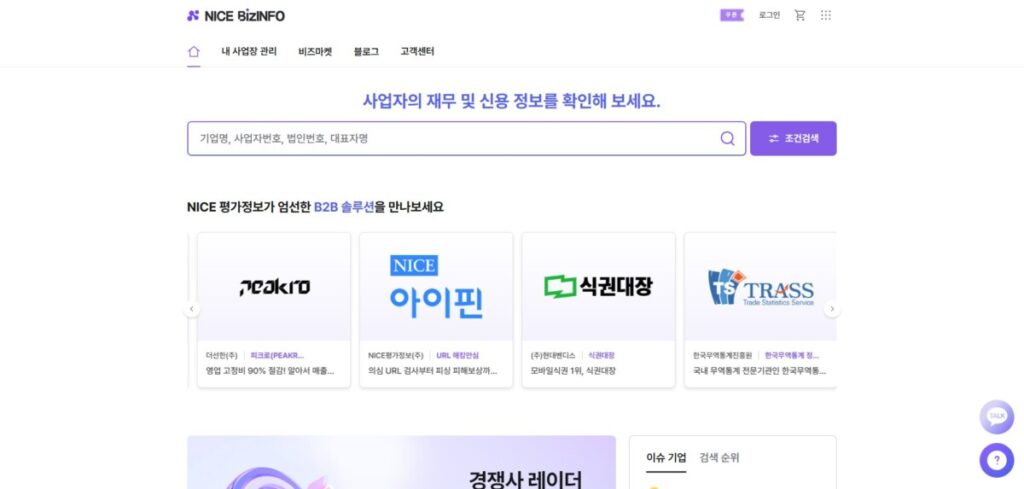
Company websites and press releases can provide information about current business activities. Services such as NICE BizINFO can be useful for checking basic company and financial information. For Korean listed companies and other companies subject to disclosure requirements, Korea’s DART system can also provide official filings and business reports.
The goal is not to find the most famous company. It is to find the company that is most relevant to what you are trying to achieve in Korea.
Once public information has helped you narrow the list, the search usually moves from companies to people.
Finding the Right Contact and Decision-Maker
Who should you be looking for?
The right person depends on what you want to discuss.
If you are exploring a distribution or sales partnership, the relevant contact may sit in overseas business, sales or business development. For product sourcing, procurement or sourcing teams may be more appropriate. Strategic partnerships may involve business development, corporate strategy or new business teams while a technology partnership may require someone in R&D or technology strategy.
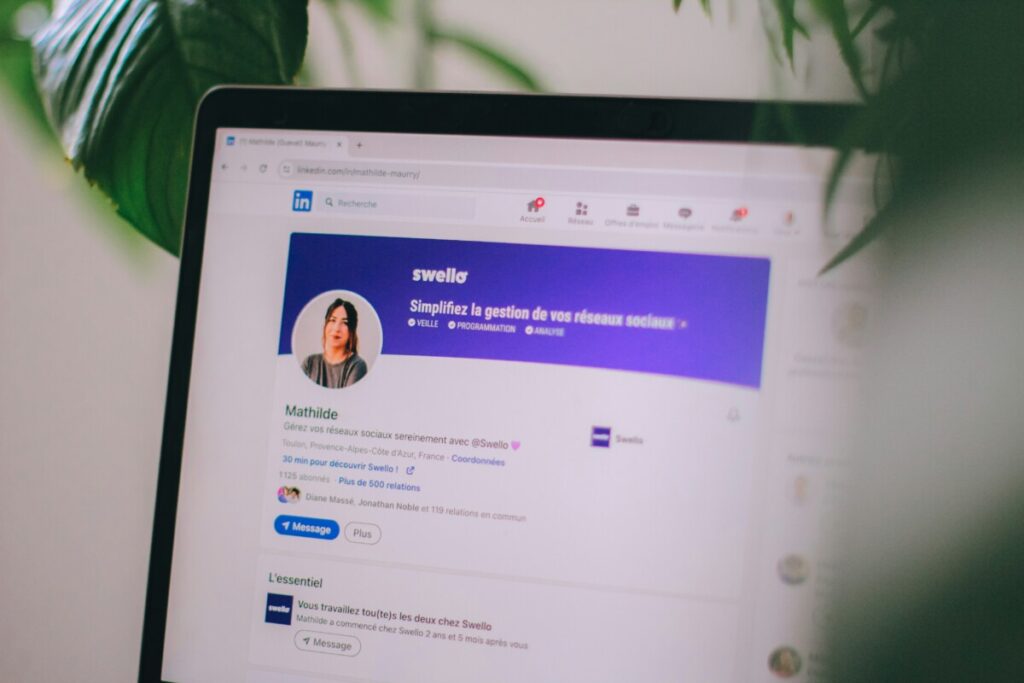
LinkedIn and Korean company websites can help identify people in these roles. Recent press releases and media interviews can also provide useful clues. When a company announces a new international expansion, partnership or business initiative, the executive or business leader responsible for the project may be mentioned.
This is why finding a senior executive is not always the goal. The more useful question is who has actually worked on the business issue you want to discuss.
Current executives vs former executives
If you want to propose an actual transaction or commercial partnership, you will generally need to reach the current person responsible for that area.
The situation is different when your first goal is to understand the market. If you want to learn how a particular Korean company operates, understand the competitive landscape or identify the companies that matter in an industry, a former executive or experienced industry professional may be more useful.
For example, a foreign company may want to speak with senior professionals from major Korean beauty companies. If the goal is to make a commercial proposal, the current decision-maker matters. If the goal is to understand the K-beauty market, competitive strategy or how Korean companies approach overseas partnerships, someone who previously led that business may be able to provide more useful context.
The right contact is therefore not necessarily the person with the highest title. It is the person with direct experience in the issue you are trying to understand or the business you want to discuss.

How to Reach the Right Person
Finding someone’s name does not mean you can easily start a conversation with them. A LinkedIn profile may be visible without the person responding to outreach. A company’s general email address or switchboard may also make it difficult to reach the specific person you need.
Your first message should therefore be more specific than simply saying that you are looking for a business partner in Korea. Explain what you are exploring, why you are approaching that particular company or person and what kind of conversation you are hoping to have.
If you are proposing a commercial partnership, make the potential area of cooperation clear. If you are still researching the Korean market, you may instead ask for a short conversation based on the person’s relevant experience rather than opening with a broad partnership proposal.
Direct outreach through LinkedIn or email is only one option. Introductions through existing customers, industry contacts, business events and professional networks can also help. When trying to reach senior executives or professionals with highly specific expertise, the quality of the introduction can matter more than simply obtaining an email address.
The goal is not just to find contact information. It is to create a credible path to an actual conversation with the person you need.

What Public Information Cannot Tell You
Company websites, LinkedIn and business information services can tell you a great deal about a Korean company and its employees. Once you begin evaluating an actual business partner, however, important questions often remain unanswered.
For example:
- Which companies actually have strong relationships with the customers or distribution channels you care about?
- Which smaller companies have significant influence within the industry?
- How is a particular company viewed by people in the market?
- Who actually influences business decisions inside the organization?
- How do Korean companies in this industry typically work with overseas partners?
These are difficult questions to answer through company size, financial statements or online profiles alone. Information that may be common knowledge among people who have worked in the industry can be extremely difficult to discover from outside Korea.
Before making an important decision, it can therefore be useful to validate what you have learned through conversations with people who have direct experience in the market. At this stage, adding more companies to your list may be less valuable than confirming whether the companies already on it actually matter.
Using Industry Networks to Connect and Validate
Learning from people who have worked in the market
Speaking directly with someone who has worked in a particular Korean industry or company can provide context that is difficult to find in public sources.
You may want to understand which distributor has the strongest relationships with key customers, which companies are gaining influence or which team inside a particular company normally handles partnerships. These are the kinds of questions that people with direct industry experience can often answer more effectively than a database or company profile.
These conversations can also be useful before approaching a potential commercial partner. Understanding the market structure and the key companies first can help you decide who to contact and how to frame the conversation.
Using Remember’s network and Liahnson & Company
Business cards have long been an important part of professional networking in Korea. Carrying and managing large numbers of paper business cards is inconvenient, so many Korean professionals use Remember to scan and digitally manage the business cards they receive. Remember began as a business card management service and has since grown into one of Korea’s major professional networks, connecting people based on their companies, roles and career histories. Its business services are built around millions of professional profiles across Korean companies.
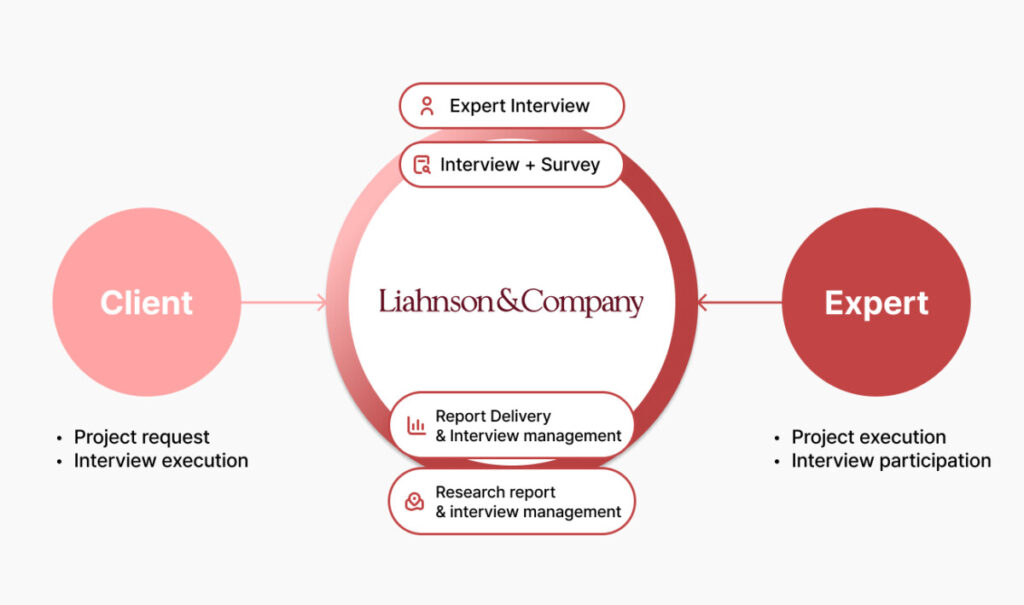
Liahnson & Company is a subsidiary of Remember. Building on this broader Korean business network and its own expert sourcing capabilities, Liahnson & Company works with a database of more than 6 million business professionals globally, including more than 5.5 million profiles in Korea. The network spans a wide range of industries, companies, functions, seniority levels and career backgrounds.
This makes it possible to search beyond generic industry experts. A company may be looking for someone who handled procurement for a specific component at a Korean automaker, a professional who has experience selecting overseas suppliers at a major Korean manufacturer, a merchandiser responsible for a particular category at a Korean retailer or a former executive who led business development and partnerships in a specific industry.
When the requirements are specific, Liahnson & Company can use its database and custom sourcing to quickly narrow down relevant professionals and establish contact. Depending on the project, companies can then speak with them through a one-on-one phone call, video interview or in-person meeting.
The value is not simply in receiving another list of Korean companies. It is in being able to define the company, role, seniority or experience you need and then identify the right people quickly enough to have a direct conversation.
Conclusion
Finding a business partner in Korea does not end with building a list of companies. You need to identify the companies that are genuinely relevant to your business, find the right people inside or around those companies and create a path to an actual conversation.
Public information can tell you a great deal, but it may not reveal a company’s real influence, industry relationships or internal decision-making structure. When those questions matter, speaking with someone who has direct experience in the market can help validate what you have found and give you a clearer view of your next step.
Ultimately, finding the right business partner in Korea is not about finding the largest number of companies. It is about finding the companies and people that matter to your business and getting connected to them.
If you are looking for a business partner or industry professional in Korea, start by telling Liahnson & Company what you need. Share the industry, target company, role, seniority or career background you are looking for. We can use our database of more than 6 million business professionals and additional custom sourcing to identify relevant people and connect you for a direct conversation.
You do not need to know the exact company or person yet. If you know the market you are exploring and the type of experience you need, we can help narrow down the right profiles from there.