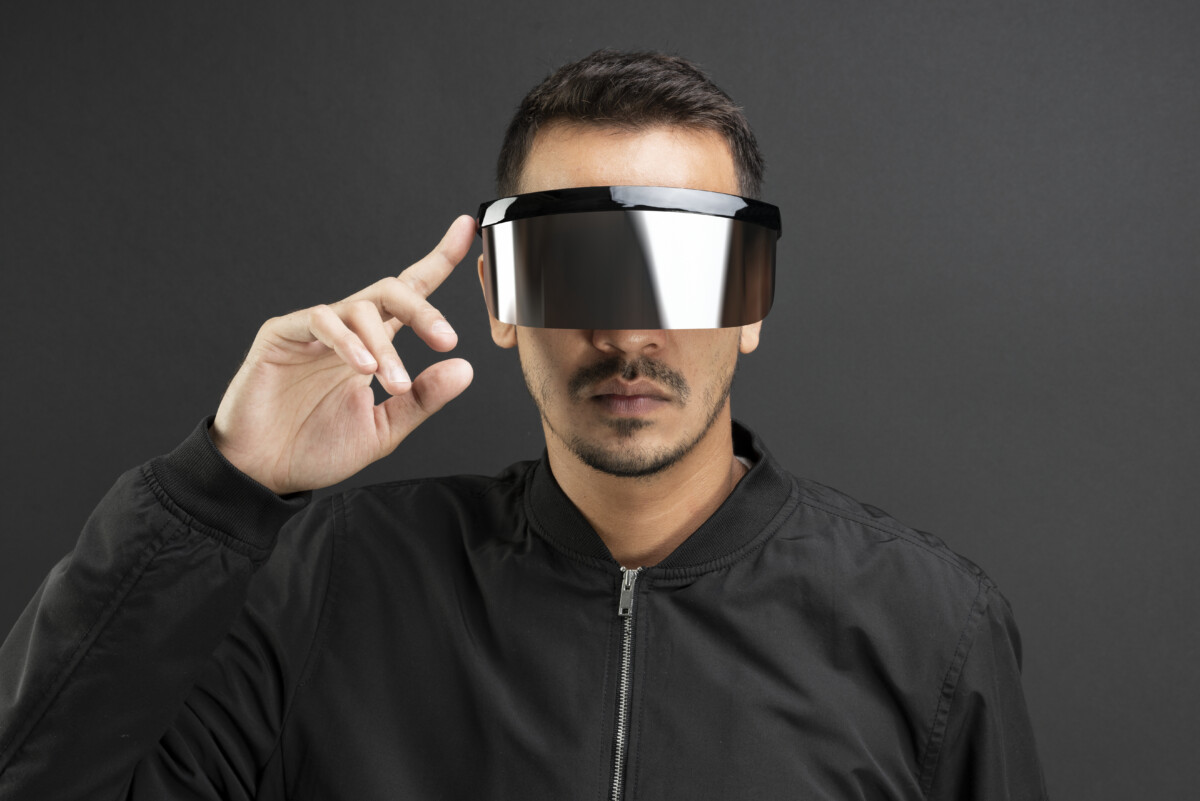
What do glasses mean to you? For some, they are a simple tool that helps you see more clearly. On a bright day, they protect your eyes from harsh sunlight. For others, they are a finishing touch that completes a personal style.
Today, however, glasses are evolving beyond a supporting tool. They are becoming an AI-powered interface that can actively assist and even shape how we interact with the world.
So how far have AI smart glasses come? Let’s take a closer look.

Why Glasses and Why Now? The Next Interface After Smartphones
Interest in AI smart glasses, which surged last year, continues into 2026. Not long ago, smart glasses were often seen as experimental gadgets used by early adopters. Now, however, the idea that they could become the “next interface after smartphones” is being discussed more seriously across media and tech communities.
This shift is driven by two major changes.
First, people are no longer satisfied with constantly looking at screens. In an era of endless notifications, messaging apps, and social media, there is a growing desire to reduce screen time while still receiving relevant information when needed. Devices like the Humane AI Pin gained attention precisely because they tapped into this expectation for screenless computing.
Second, the hardware has finally reached a point where glasses actually look and feel like glasses. Early devices like Google Glass were clearly distinguishable as “tech on your face.” Today’s AI smart glasses are much smaller, lighter, and often indistinguishable from regular eyewear. Advances in waveguides, micro displays, and ultra-low-power chips have made it possible to combine real-world usability with AI capabilities.
Glasses are already something people wear every day. They sit naturally within the user’s field of view and can integrate cameras, microphones, speakers, and even small displays without disrupting everyday life. This is why companies like Meta, Google, and Samsung see glasses as one of the most viable form factors for the post-smartphone era.
Key Players Driving the AI Smart Glasses Market in 2026
The most practical way to understand the current market is to look at who is actually building and shipping products. Based on discussions across YouTube, Reddit, and tech communities, the market can be broadly grouped into four major categories.
Meta × Ray-Ban
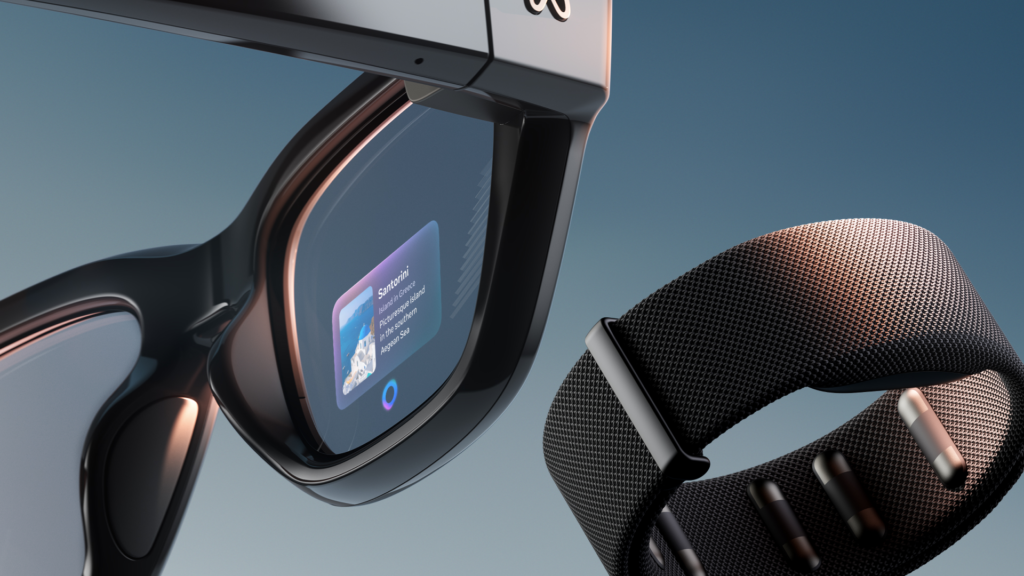
Meta Ray-Ban is currently one of the most widely discussed product lines in the everyday AI smart glasses category. It consistently ranks among the top products in “Best AI Glasses 2026” content by tech creators, and its sales are growing rapidly.
The product has evolved as follows:
- 1st Generation: Focused on camera, microphone, and speakers, enabling photo and video capture, live streaming, and voice assistant access
- 2nd Generation: Improved audio quality and microphone performance, enhanced voice recognition, and added features tailored for content creators
- Latest Generation (Ray-Ban Meta Gen 2 / Display): Some models include a small display and gesture input, offering notifications and basic HUD (Head-Up Display: information overlaid within your field of view) functionality
In February 2026, EssilorLuxottica, Ray-Ban’s parent company, announced that Meta AI glasses sales had nearly tripled. This marked a turning point, positioning the product as one of the first AI smart glasses to achieve real commercial traction.
Across online communities, users frequently highlight the following strengths:
- Looks like regular glasses
- Instant photo and video capture without taking out a phone
- More polished than competing products not yet released by Google or Apple
At the same time, concerns around privacy and pricing still exist. Despite this, Ray-Ban Meta stands out as one of the most widely adopted AI smart glasses to date.
Google × Samsung × Warby Parker
After the failure of Google Glass, Google is now taking a fundamentally different approach to AI smart glasses, targeting a launch around 2026.
The strategy revolves around two distinct product lines.
- Display-free AI Glasses
The first line, introduced as “AI glasses,” does not include a display. Instead, it relies on speakers, microphones, and a camera. Users interact through voice and simple touch gestures to activate Gemini, take photos, perform real-time translation, and search for information. While similar in positioning to Meta Ray-Ban, its key advantage lies in deep integration with Google services such as Search, Maps, Gmail, and Photos.
- AR Display-Based Android XR Glasses
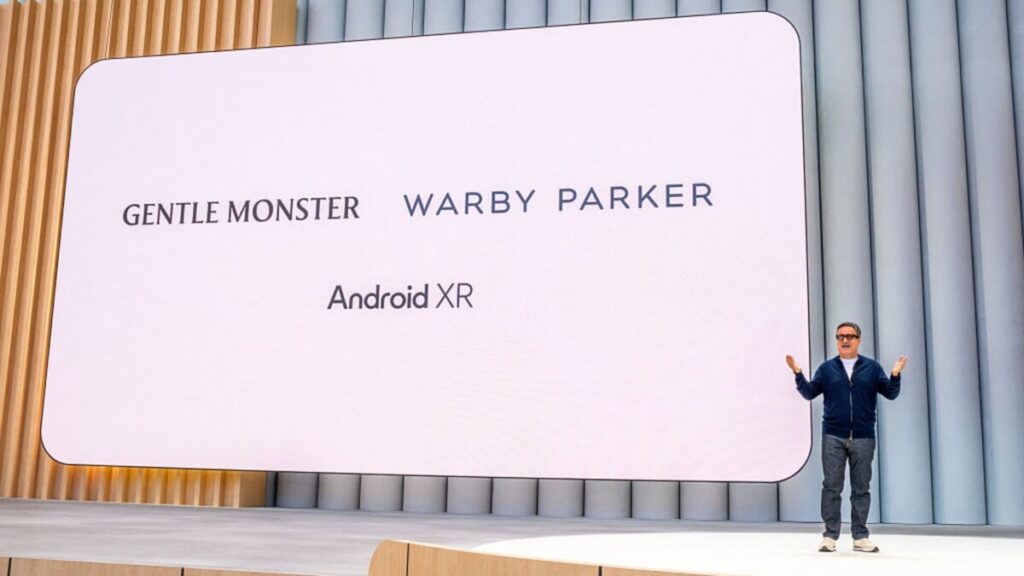
The second line includes built-in displays that overlay digital information onto the real world. These AR/XR glasses are being developed in collaboration with Samsung, Gentle Monster, and Warby Parker, combining hardware, design, and the Android XR + Gemini platform.
One of the most talked-about moments came from the MWC 2026 demo, where Google showcased prototype glasses with capabilities such as:
- Real-time translation of foreign signs directly within the user’s field of view
- Recognizing an LP album cover and instantly playing the music
- Reading an address from a poster and displaying navigation immediately
- Sharing first-person perspective through Google Meet video calls
Although these are still prototypes, many in the tech community see this as a preview of a future where most smartphone-based tasks are handled directly within one’s field of view.

Samsung
Samsung is one of the few companies that combines both XR hardware and a strong mobile ecosystem. After entering the spatial computing market with its XR headset in 2025, the company has announced plans to release lighter AR/AI glasses in 2026.
The expected direction includes:
- Android XR-based platform tightly integrated with Galaxy smartphones, tablets, watches, and earbuds
- Use of Qualcomm AR1 chips and low-power displays to reduce battery consumption
- Focus on practical AR overlays such as notifications, navigation, translation, and multi-screen experiences
At CES 2026, Samsung emphasized its “AI Companion” strategy, which spans TVs, home appliances, and mobile devices. Industry observers expect AR/AI glasses to play a key role within this ecosystem.
For Korean users in particular, the level of integration with services such as Naver Maps, KakaoTalk, local payments, delivery platforms, and mobility services will be a critical factor.
Apple
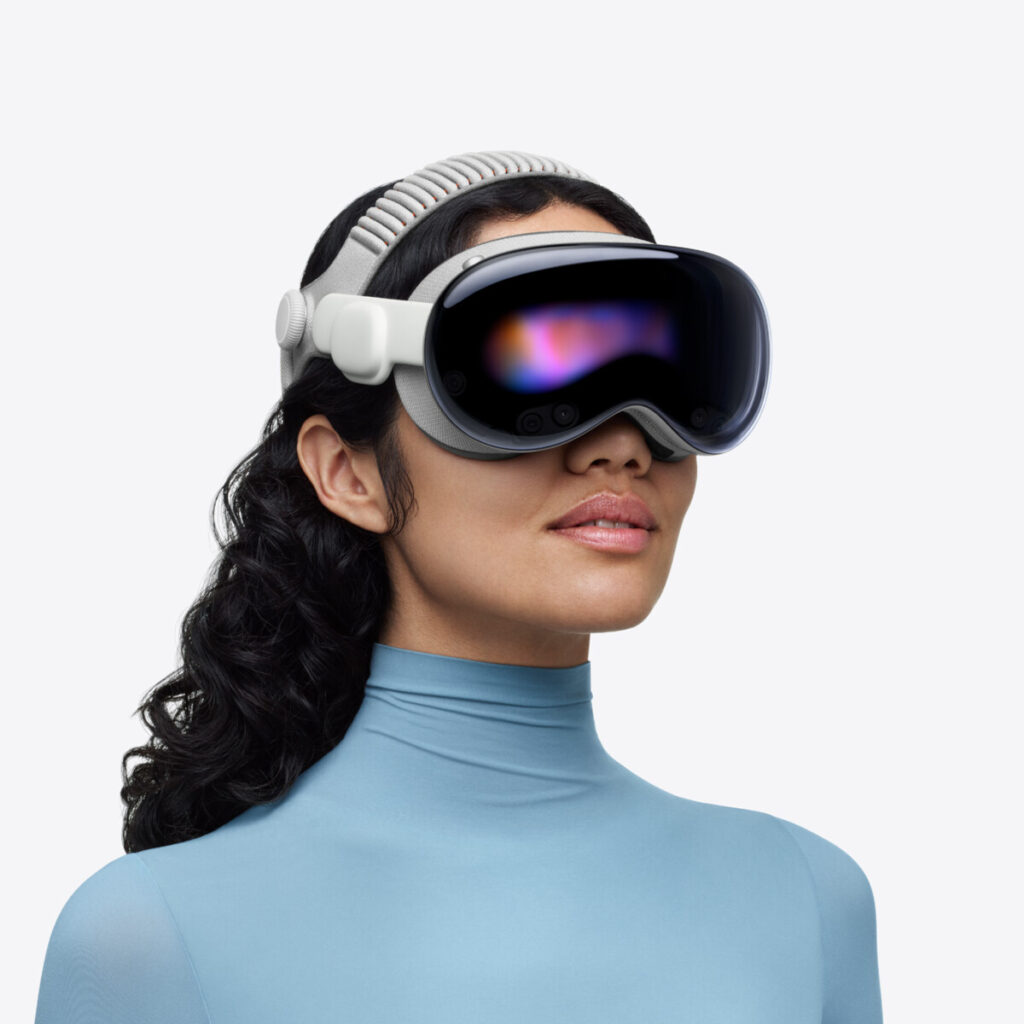
Apple has already set the standard for headset-based spatial computing with Vision Pro. However, real-world users have pointed out that its price, weight, and comfort make it difficult to use on a daily basis.
Based on reports and analysis since 2025, Apple’s strategy can be summarized as follows:
- Build technology, ecosystem, and developer experience first with a high-end headset like Vision Pro
- Expand into everyday use through lightweight glasses loosely connected to the iPhone
- Move toward fully featured AR glasses with displays over the long term, but only after securing sufficient technology, battery performance, and social acceptance
Until Apple fully launches Apple Glass, it is effectively pre-designing the user experience through iOS, VisionOS, AirPods, and Apple Watch.
In this sense, Apple’s approach is not just about launching a product, but about gradually preparing AR glasses as the next major computing interface.
XREAL, VITURE, INMO and Others
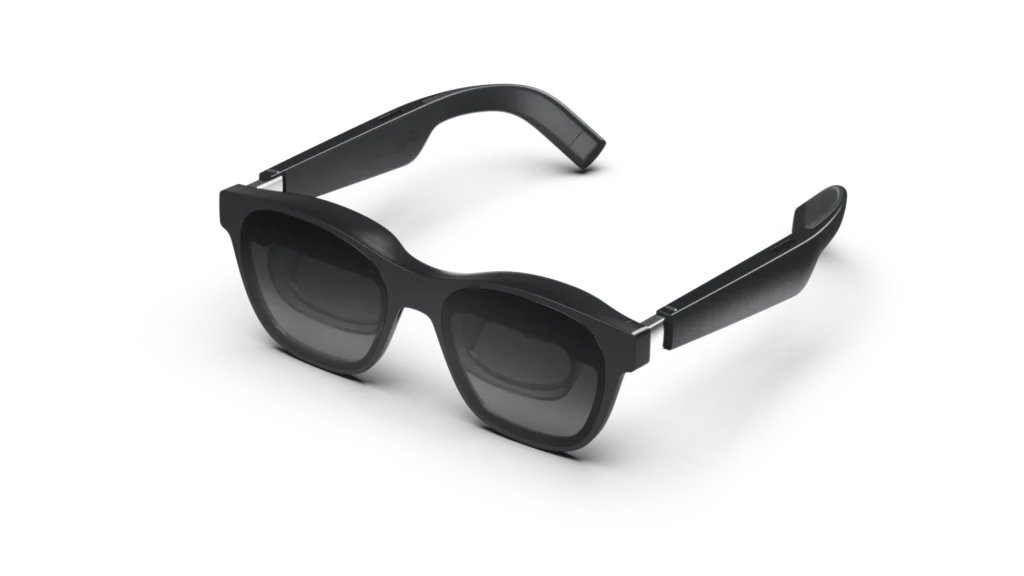
Beyond big tech, companies like XREAL, VITURE, INMO, RayNeo, and Rokid have already introduced a range of AR and AI glasses. These brands frequently appear in reviews and discussions across YouTube and Reddit.
For example, XREAL Air 2 Ultra stands out with the following features:
- 6DoF spatial tracking and dual 3D sensors for accurate environment recognition
- Lightweight design (around 80g) and relatively accessible price (~$699)
- “Spatial desktop” experience, enabling virtual monitors when connected to laptops, consoles, or smartphones
Other devices such as VITURE Luma Ultra, RayNeo X3 Pro, and Even Realities G2 are also receiving positive feedback online.
These products share several common characteristics:
- High-resolution virtual displays for movies, gaming, and productivity
- AI-based real-time translation, subtitles, and voice assistant features
- Some models operate as standalone devices with their own OS and app ecosystem
While these products are currently more popular among enthusiasts, creators, and developers, they play an important role in shaping the ecosystem. The applications, content, and usage scenarios they create are likely to influence future mainstream AI smart glasses. If you’re looking to connect directly with the minds who designed and built these innovations, reach out to us today.

5 Key Trends in the AI Smart Glasses Market (2026)
Although the AI smart glasses market is still in its early stages, several clear patterns are emerging across products and strategies. The following five trends help explain where the market is heading.
Trend 1 – Screenless AI and HUD Glasses Are Evolving in Parallel
AI smart glasses are no longer defined by whether they include a display. Some companies are focusing on AR visuals, while others are prioritizing screenless AI experiences.
Google’s Gemini glasses, for example, include models designed without displays, relying instead on audio-based interaction. Meta Ray-Ban also started as a camera and voice-first device before gradually adding display elements.
As a result, the market is likely to split into two directions:
- HUD-based AR glasses that overlay information in the user’s field of view
- Screenless AI glasses centered around voice assistants
Trend 2 – Visual Recognition Is the Core Competitive Advantage
The defining capability of AI smart glasses is their ability to understand what the user is looking at. Recent products are moving beyond simple capture to real-time contextual interpretation.
Meta’s “look and ask” feature allows users to point their view at an object and receive instant explanations. Future versions are expected to expand this into more advanced “super sensing” capabilities.
This means users may soon be able to:
- Identify objects or buildings instantly
- Translate signs in real time
- Access product information without using a phone
In essence, AI smart glasses are evolving into an interface for searching and understanding the physical world.
Trend 3 – Voice, Gesture, and Neural Interfaces Are Becoming the New Inputs
Because glasses lack large touchscreens, new input methods are essential. Most companies are exploring combinations of voice, gesture, and emerging neural interfaces.
Meta is experimenting with neural wristbands that detect finger movement as input signals. XREAL, on the other hand, combines gesture tracking, head tracking, and physical controllers such as Mirage Shard.
These approaches point toward a broader shift: computing is moving away from keyboards and touchscreens toward body-based interaction.
Trend 4 – AI Glasses Are Becoming Fashion Products
Design is becoming just as important as technology. Since glasses are worn on the face, consumers care deeply about appearance and brand identity.
Meta’s collaboration with Ray-Ban is a clear example. By embedding AI functionality into familiar eyewear design, the product feels less like a gadget and more like a lifestyle item.
Similarly:
- Google is working with Warby Parker and Gentle Monster
- Samsung is expected to explore fashion partnerships
The key insight is that AI glasses will scale only when they are not just functional, but desirable to wear.
Trend 5 – Spatial Computing Is Moving from Headsets to Glasses
Headsets like Apple Vision Pro and Galaxy XR deliver powerful experiences, but their size and cost limit everyday adoption.
In contrast, companies such as XREAL, INMO, RayNeo, and VITURE are focusing on lightweight glasses that bring spatial computing into daily life.
Another emerging factor is AI earbuds. Some companies are exploring ear-based interfaces as an alternative to glasses.
This suggests a future competition between:
- AI smart glasses (head-worn)
- AI earbuds (ear-worn)
While it is still unclear which will dominate, the overall direction is clear: AI is becoming more seamlessly integrated into everyday environments.

Real-Life Scenarios: How AI Smart Glasses May Be Used
Understanding these technologies becomes easier when we imagine real-world use cases.
#1. Google Gemini Glasses and Screenless Search
Imagine you are grocery shopping. Standing in front of a shelf full of cereal, you are unsure what to choose.
You say:
“Recommend a cereal that is low in sugar and high in protein.”
The AI smart glasses analyze the products in front of you and respond:
“The second blue box from the right best matches your criteria.”
With AR-enabled models, this information could appear directly on the product itself.
Navigation works the same way. In an unfamiliar city, directional arrows appear within your field of view, and signs are translated automatically, making it possible to move around almost like a local.
#2. Spatial Computing at Your Desk
Now imagine sitting at your desk wearing XREAL Air 2 Ultra.
Instead of a physical monitor, three virtual screens appear:
- Left: web browser
- Center: document editor
- Right: messenger
A slight turn of your head moves the window focus, and hand gestures allow you to scroll or move the window. Thanks to 6DoF tracking and 3D environmental sensors, these virtual windows feel anchored to a specific location on your desk, as if you are looking at real monitors.
While this may still feel futuristic, it is already possible today. As this technology becomes lighter and more integrated into everyday devices, a single pair of glasses could connect both daily activities and work environments.

Real-World Barriers AI Smart Glasses Still Need to Overcome
Despite rapid progress, several challenges remain before AI smart glasses become truly mainstream.
1. Privacy and Regulation
Privacy remains the most significant concern.
- Always-on cameras
- AI analyzing surroundings
- Built-in microphones
These features raise concerns about recording and data collection in public spaces.
Meta Ray-Ban includes LED indicators during recording, but debates continue about whether this is sufficient. Alternatives such as sensor-based spatial recognition without video recording are being explored.
Regulators are also beginning to address new rules around recording, facial recognition, and data usage.
2. Battery, Heat and Cost
Battery limitations are a fundamental constraint. The small form factor of glasses restricts battery size, making all-day usage difficult.
At the same time, adding high-performance chips, cameras, and displays leads to:
- Heat issues
- Increased weight
- Faster battery drain
Current devices are closer to secondary devices rather than full replacements for smartphones.
Pricing is another barrier. Products like Meta Ray-Ban and XREAL Air 2 Ultra are typically priced between $600 and $800, which remains high for mass adoption.
3. UX and Behavior Change
User experience is still evolving. As seen with devices like Humane AI Pin, entirely new product categories often face early-stage usability challenges.
Issues such as battery life, recognition accuracy, and interaction design may feel slightly inconvenient at first. AI smart glasses will likely require several product generations before reaching maturity.
However, the potential impact is significant. If information can be accessed directly within one’s field of view, the way people search, consume, and interact with information could fundamentally change.
Conclusion
AI smart glasses are not yet fully mature products, but they clearly represent the beginning of a major shift. Challenges such as privacy, battery limitations, and pricing still need to be addressed before they become part of everyday life.
What matters most, however, is the direction. Moving away from screen-based interaction toward a world where information is layered directly onto reality is no longer theoretical. It is already being implemented in various forms.
As these technologies become lighter, more affordable, and more socially accepted, AI smart glasses may evolve from a niche device into a primary interface.
In the same way smartphones once replaced many existing tools, AI smart glasses have the potential to redefine how we interact with information and with the world itself.

Sources
- CNBC – Ray-Ban maker EssilorLuxottica triples sales of Meta AI glasses https://www.cnbc.com/2026/02/11/ray-ban-maker-essilorluxottica-triples-sales-of-meta-ai-glasses.html
- YouTube – Ray-Ban Meta Gen 3 Smart Glasses Are Coming in 2026 https://www.youtube.com/watch?v=zJWMwJrlvIk
- Macworld – Apple reportedly scraps lighter Vision Pro to focus on Meta glasses killer https://www.macworld.com/article/2928144/apple-reportedly-scraps-lighter-vision-pro-to-focus-on-meta-glasses-killer.html
- Android Central – Samsung confirms its next-generation AR glasses will arrive this year https://www.androidcentral.com/gaming/virtual-reality/samsung-confirms-ar-glasses-2026
- Bloomberg – Google Says First AI Glasses With Gemini Will Arrive in 2026 https://www.bloomberg.com/news/articles/2025-12-08/google-says-first-ai-glasses-with-gemini-will-arrive-in-2026
- Mashable – Google’s AI glasses are coming in 2026 https://mashable.com/article/google-ai-glasses-2026
- Reuters – Warby Parker, Google to launch AI-powered smart glasses in 2026 https://www.reuters.com/business/warby-parker-google-launch-ai-powered-smart-glasses-2026-2025-12-08/
- Tom’s Guide – Google’s new Android XR smart glasses use Gemini to AI edit your world while you walk https://www.tomsguide.com/computing/smart-glasses/googles-new-android-xr-smart-glasses-use-gemini-to-ai-edit-your-world-while-yo…
- Samsung Newsroom – CES 2026: Inside Samsung’s “The First Look 2026”: A Vision of AI Companions for Everyday Life https://news.samsung.com/global/ces-2026-inside-samsungs-the-first-look-2026-a-vision-of-ai-companions-for-everyday-life
- Reddit – Air 2 Ultra – New Details, Press Release (XREAL Air 2 Ultra) https://www.reddit.com/r/Xreal/comments/190tm50/air_2_ultra_new_details_press_release/
- PR Newswire – RayNeo Debuts the World’s First HDR10-enabled AR Glasses at CES 2026 https://www.prnewswire.com/news-releases/rayneo-debuts-the-worlds-first-hdr10-enabled-ar-glasses-at-ces-2026-302653001.html
- Mashable – The best smart glasses of CES 2026 — Xreal, TCL, Even … https://mashable.com/article/best-smart-glasses-ces-2026
- In Air Space – Upcoming Smart Glasses 2026: The Invisible Revolution Reshaping Reality https://inairspace.com/blogs/learn-with-inair/upcoming-smart-glasses-2026-the-invisible-revolution-reshaping-reality
- Intelligent Living – The 2026 Smart Glasses Surge: How AI and AR Eyewear … https://www.intelligentliving.co/2026-smart-glasses-ai-ar-eyewear/
- TechGenyz – Humane AI Pin: Bold Leap Toward Post-Smartphone Future in 2025 https://techgenyz.com/humane-ai-pin-review-smartphone-replacement/
- TechCrunch – Humane’s Ai Pin promises an ‘ambient computing’ future for $699 https://techcrunch.com/2023/11/09/humanes-ai-pin/
- Mashable – OpenAI says its AI wearable is on track as AI earbuds … https://mashable.com/article/openai-ai-wearable-2026-release-earbuds-rumors