
As Korean content and Korean companies gain stronger global visibility, more global companies are actively considering entry into the Korean market or planning further expansion. Across industries such as consumer goods, technology, manufacturing and financial services, Korea continues to attract attention as a viable business destination. With strong consumer purchasing power, rapid technology adoption and close connectivity with other major Asian markets, Korea holds clear strategic value.
However, many global companies encounter a common challenge when researching the Korean market. While public data and reports are widely available, it remains difficult to understand how decisions are actually made in real business settings. Market size, growth rates and competitive landscapes can now be analyzed easily, even with AI, but these numbers often do not translate directly into execution outcomes.
This is why companies need Korean experts with real operational experience. The Korean experts referred to here are not academic advisors. They are individuals who have worked inside Korean companies and participated directly in decision making and execution across their organization, industry and competitive landscape. In this article, we examine why global companies expanding into Korea need Korean experts and the challenges they face when trying to find them.

Why Korean Experts Are Essential for Expanding into Korea
From the outside, the Korean market appears relatively well structured. Major industries are centered around large corporations, and regulations and systems are well documented. With many global companies already operating in Korea, it may appear that strong research alone is enough to succeed.
In practice, this assumption rarely holds. Companies that run projects in Korea quickly discover that formal systems and informal decision making processes operate simultaneously. Laws and regulations may be clearly written, but their interpretation and application vary depending on situation and context. According to Invest Korea, foreign invested companies frequently cite regulatory complexity, administrative procedures and a lack of understanding of the local business environment as key operational challenges. This indicates that risk in the Korean market is driven less by market size and more by how well companies understand and adapt to local systems and business practices.
For this reason, companies expanding into Korea should engage Korean experts early. This applies not only to Korea but also to any international market. Local experts provide insight based on real experience rather than abstract theory, helping companies enter the Korean market with greater stability.

Common Challenges When Global Companies Look for Korean Experts
Understanding the need for Korean experts is one thing. Finding the right expert is another. Many global companies struggle at this stage, not because of a lack of talent but due to structural challenges.
1. Low Visibility and Difficulty Verifying Experience
Korean experts with real decision-making experience often do not actively promote themselves on global platforms. Internal project experience is rarely shared publicly, which makes it difficult to identify suitable experts through search or LinkedIn alone.
Even when experience is listed, it is hard to assess whether an expert led strategic decisions, managed execution or played a supporting role. As a result, companies often invest significant time and effort before connecting with the right expert.
2. Titles Do Not Reveal Actual Roles or Compliance Boundaries
Job titles and company names provide limited insight into actual authority or access to information. In Korean corporate environments, titles vary widely regardless of seniority. A junior employee may hold a ‘team lead’ title, while a senior professional may carry a ‘manager’ title.
Compliance considerations add complexity. In projects involving competitor analysis, market research or partner evaluation, it is not always clear which questions are appropriate or which information can be shared. Without clear boundaries, companies risk unintended compliance exposure. For this reason, expertise, ethical standards and information sharing practices must all be evaluated together.
3. Context and Identity Management Matter More Than Language
Many companies prioritize English fluency when selecting Korean experts. While communication matters, the greater challenge lies in whether the expert can clearly explain Korean market context and conduct interviews without exposing the client’s identity.
In sensitive projects such as competitor research or confidential market studies, client identity must remain protected and question intent must be carefully managed. If this balance is not maintained, information quality deteriorates and interviews lose value. Ultimately, project success depends on how well experts interpret questions and respond within the correct context.
How to Find Korean Experts Effectively
Once companies understand why Korean experts are essential and the challenges involved, the next step is identifying an effective approach.
Step 1. Define Experts Around Project Objectives
Rather than searching for someone who generally knows the Korean market, companies should begin by defining the specific questions their project needs to answer.
| Project Objective | Relevant Expertise |
|---|---|
| Distribution structure and channel strategy | E-commerce platform leaders channel strategy managers vendor management specialists |
| Regulatory risk and market entry barriers | Legal professionals from regulated industries competition and compliance specialists |
| Localized product design and UX UI | Product managers or senior designers from leading Korean technology firms |
By defining objectives first, companies can focus on relevant experience rather than title variations.
Step 2. Use Structured Expert Network Platforms
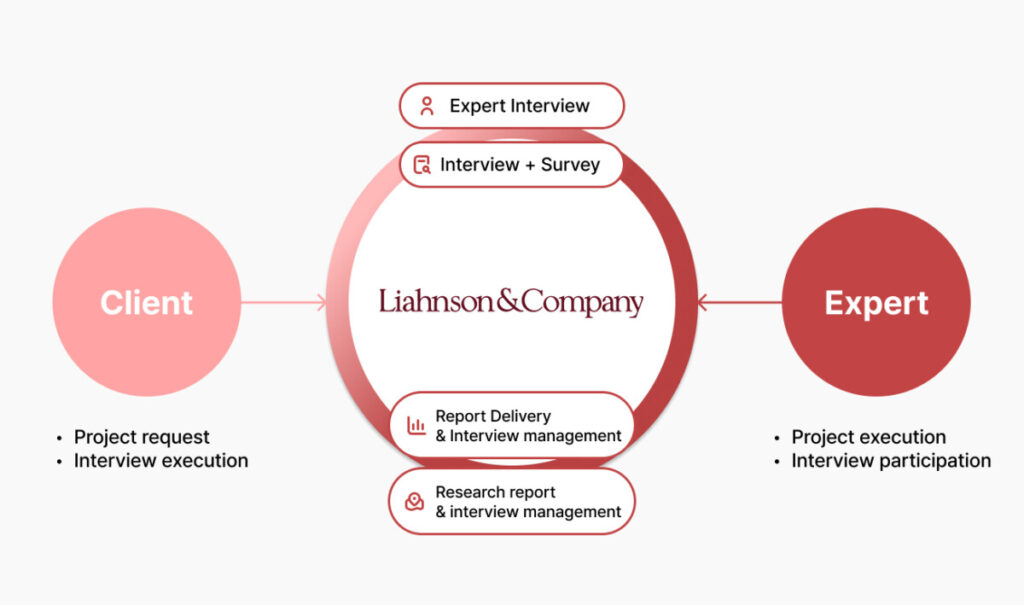
Identifying experts independently introduces risks related to compliance, confidentiality and payment processes. Structured Expert Network Services address these challenges.
Expert Network providers maintain vetted pools of Korean experts matched to project requirements. Clients can conduct interviews without revealing their identity, while compliance and payment processes are handled securely. Additional services such as interpretation or reporting are often available.
Liahnson and Company is one of the largest ENS providers focused on Korea, with access to more than 4 million Korean experts. For companies seeking direct conversations with Korean experts, working through such platforms offers an efficient and controlled approach.
Conclusion
The Korean market offers meaningful opportunity but also presents higher entry barriers than many foreign companies expect. Public data and reports alone are rarely sufficient to understand real decision making dynamics or execution risk, and this gap cannot be filled by AI alone.
Finding the right Korean experts and engaging them as strategic partners rather than information sources is essential. Companies must understand why Korean experts are needed, how to find them and how to evaluate them effectively.
When approached correctly, expanding in Korea becomes not an uncertain challenge but a deliberate strategic choice. The most reliable way to understand the Korean market remains learning from those who have experienced it firsthand.

Reference
https://www.investkorea.org/ik-en/bbs/i-459/detail.do?ntt_sn=32651
Latest Posts
- Corporate Due Diligence: How to Identify Hidden Risks Behind Financial Statements
- AI in the Defense Industry: How Artificial Intelligence Is Changing Modern Warfare
- Ping An Insurance and the Future of AI Driven Insurance Transformation
- Who Is the Best ENS Company in Asia? – Why Liahnson & Company Leads the Asia Expert Network Market
- No Entry for Humans: How to Easily Understand Moltbook and Moltbot, a Bot Only Social Network Run by AI Agents
Leave a Reply
You must be logged in to post a comment.