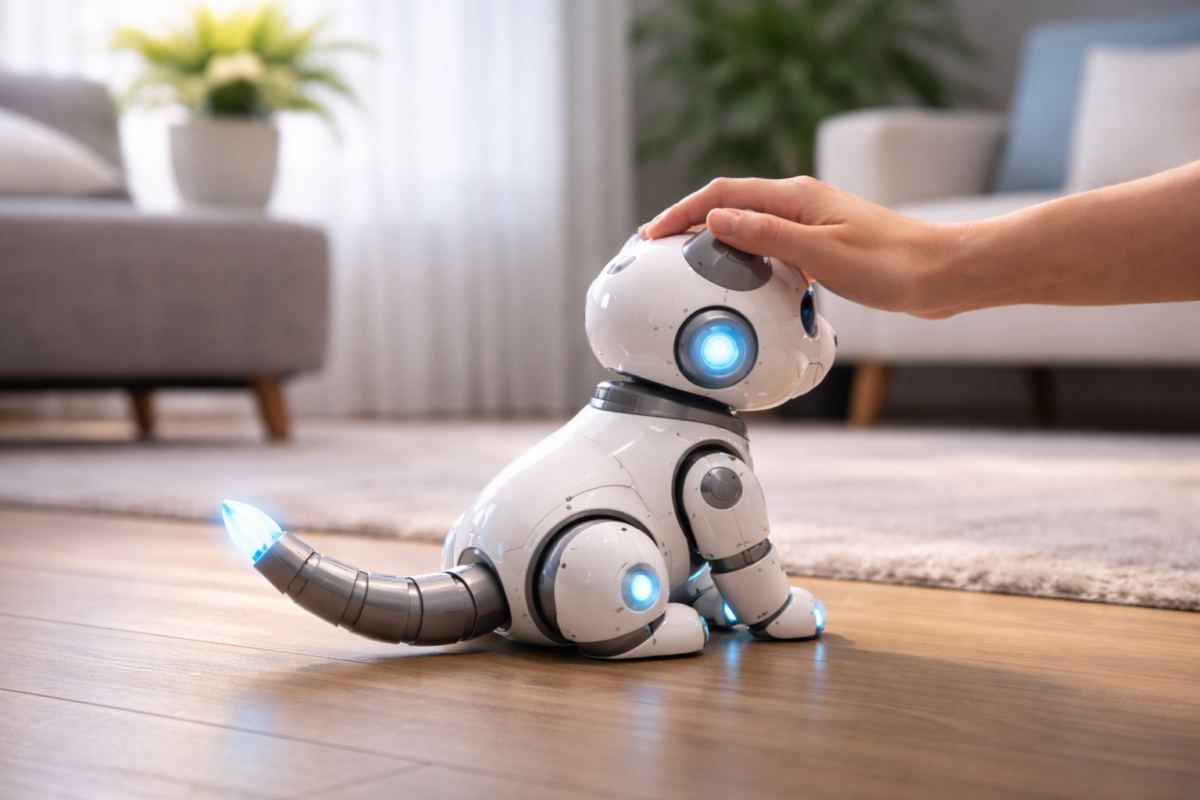
Do you remember raising a virtual pet through a game when you were younger? About fifteen years ago, many children grew up caring for digital pets through Nintendo’s Nintendogs. Although those pets did not exist in the real world, players invested real time and emotion into raising them as if they were their own.
Today, that experience has moved beyond the screen. What was once a virtual dog inside a game has become something you can interact with in real life. This shift is driven by the rise of AI companion animals. By the end of 2025, AI companion animals ranked among the most talked-about products across global toy, home appliance and consumer tech categories. These products go beyond being simple moving toys. They respond to human speech and emotion, gradually develop unique personalities and steadily integrate into everyday life.
In this article, we explore why AI companion animals have taken over year-end shopping lists and examine the market trends, real-world use cases and future outlook shaping this fast-growing category.
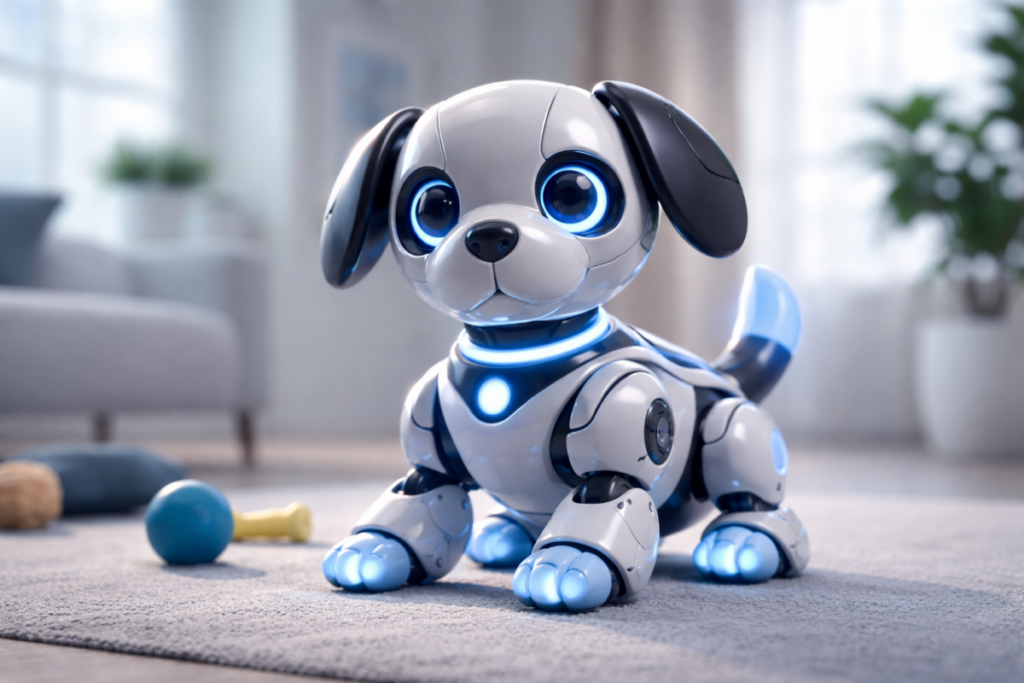
What Is an AI Companion Animal?
So what exactly defines an AI companion animal?
An AI companion animal is a system that combines sensors, cameras, microphones and motors with speech recognition, natural language processing, emotion recognition and behavior-generation algorithms. From a technical perspective, this definition is accurate. From a user experience perspective, however, the more important question is not how advanced the technology is but how strongly it feels like a presence that is truly there with you.
AI companion animals can be understood through three key dimensions.
- Physical Form
AI companion animals exist in many forms including robot pets shaped like dogs or cats, small robots designed for desks, AI-enabled plush toys and digital characters that live inside apps or AR environments.
- Depth of Interaction
The boundary between a simple toy and an emotional companion depends on whether the device remembers a user’s name and voice, connects conversations over time and expresses emotion through facial expressions, movement or tone.
Evolution Over Time
Modern AI companion animals accumulate interaction data and gradually adapt their responses and personalities to individual users. This means they are no longer fixed characters but relationship-driven digital beings that evolve over time.
While early digital pets were limited by rule-based systems, AI companion animals developed since the mid-2020s use large language models and emotion recognition to generate empathetic responses and build long-term interaction patterns.
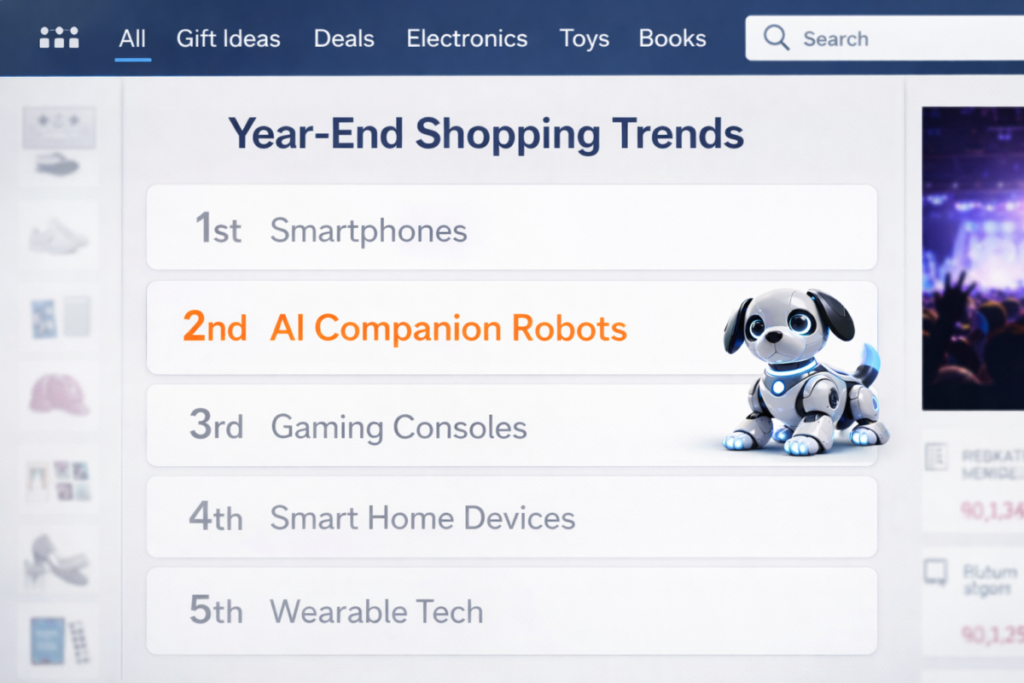
AI Companion Animals in Global Year-End Shopping Trends
AI companion animals ranked highly in year-end shopping trends across multiple countries in 2025. However, the motivations behind purchases and the types of products consumers preferred varied by region.
| Market | Consumer Perception | Primary Purchase Motivation |
|---|---|---|
| China | Emotion-support AI toys | Reducing loneliness, anxiety and stress |
| US and Europe | Family-oriented interactive robots | Shared play, home entertainment, child development |
| South Korea | Lifestyle devices for single households and MZ generations | Emotional companionship and psychological stability |
China
In China, AI companion animals have become emotion-support tools for young adults and MZ consumers experiencing stress and anxiety. Products such as Robopoet and Ropet are often perceived as listeners that help manage emotional pressure rather than as traditional toys.
US and Europe
In the US and Europe, robot pets like Loona, EMO and Moflin are featured in holiday gift guides alongside game consoles and smart speakers. Consumers tend to view AI companion animals as family robots that encourage interaction, creativity and shared entertainment at home.
South Korea
In South Korea, AI companion animals are increasingly chosen by single-person households and MZ consumers who find it difficult to raise real pets. These products function as emotional companions in small living spaces and as lifestyle devices that provide a sense of companionship after work.
Despite regional differences, all three markets share a common theme: AI companion animals are perceived as emotional companions. This suggests that the category is likely to expand further across different lifestyles rather than being limited to specific age groups or regions.

Main Types and Functions of AI Companion Animals
AI companion animals currently on the market can be broadly categorized into four types based on form and usage context.
1. Robot Pets That Mimic Companion Animals
The most representative type is robot pets designed to resemble real animals. Moflin, which gained attention in Japan through crowdfunding, features a small furry appearance and emphasizes emotional AI as its core concept. Built on more than four million emotional state combinations, Moflin gradually changes its responses and personality over roughly fifty days of interaction based on touch and environmental stimuli. This design encourages users to perceive the robot not as a device but as a companion that forms a relationship over time.
2. Desktop AI Companion Animals
Desktop AI companions are designed for desks and indoor spaces. Robots such as Loona and EMO combine expressive displays with mobility, allowing them to make eye contact and respond with sound and movement. EMO in particular offers a wide range of expressions, music and dance modes and smart lighting control, making it suitable both as a playmate for children and as a desk companion for adults.
3. AI Dolls and Character-Based Companions
This category combines AI with plush toys or character figures. A representative example developed by the Chinese company Haivivi analyzes a child’s voice tone and speech content to deliver comforting and empathetic responses. In real-world use, the doll reacts immediately to a child’s emotional expressions, demonstrating how AI companion animals can function as approachable conversation partners for children.
4. Care-Focused Companion Robots for Medical and Nursing Use
Care-focused companion robots are used in medical and nursing environments. These robots appear in various forms including pet-shaped, doll-shaped and humanoid designs. They provide functions such as medication reminders, fall detection, simple conversation, music and play and family video call support. A 2025 meta-analysis published in the Journal of Medical Internet Research reported that intelligent robot interventions significantly reduced agitation and anxiety in patients with dementia. The study noted that while improvements in cognition and quality of life were limited, emotional stabilization became more evident when interventions lasted longer than twelve weeks.
Real-World Use Cases of AI Companion Animals
After understanding what AI companion animals are and how they function, it is helpful to examine how they are actually used in daily life.
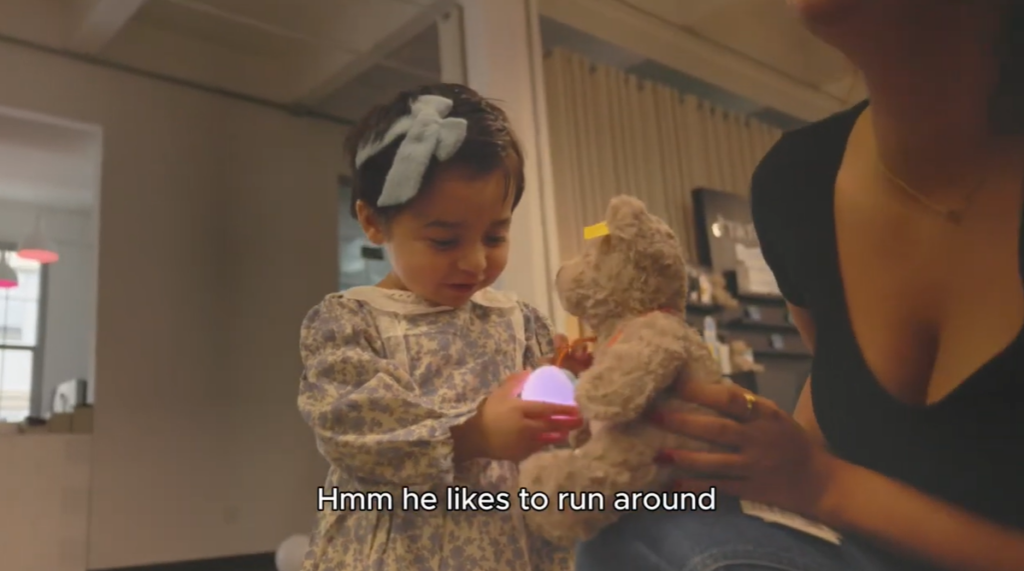
BubblePal
Developed by Haivivi in China, BubblePal is a clip-on AI module that can be attached to existing plush toys. Instead of purchasing a new robot, parents can turn a familiar toy into an AI companion.
Key Features
- Clip-on AI module for plush toys
- Multi-turn conversation and emotion recognition
- Custom story creation and touch response
Use Cases
- Encourages children to read, answer questions and play through conversation
- Serves as a conversation partner when parents are busy
Sales Performance
- Over 250,000 units sold within one year of launch in July 2024
- More than 10,000 units sold in the first month and over 20,000 units per month by 2025
- Ranked number one in online AI toy sales in China according to iResearch
Loona
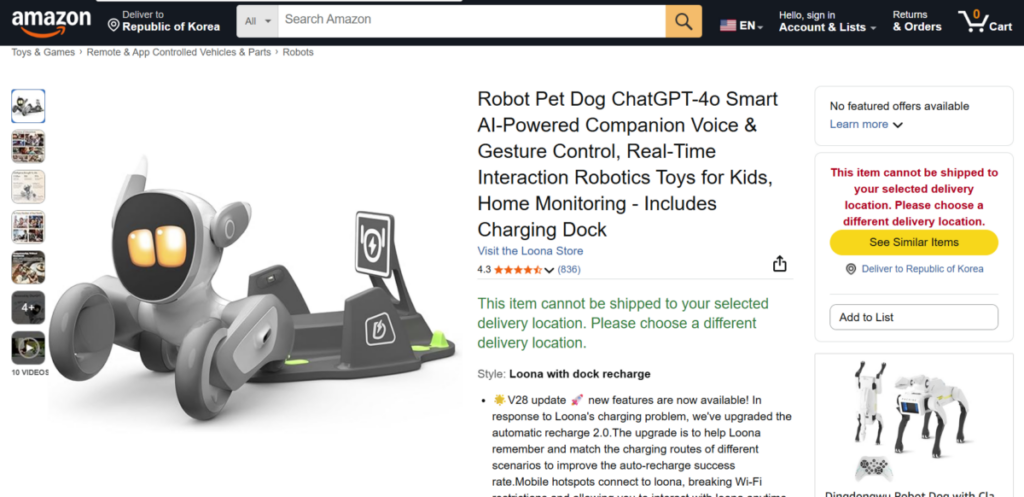
Loona is a robot pet that moves freely across desks and home spaces and is positioned as a shared home companion for the entire family.
Key Features
- ChatGPT-4o-based conversation processing with up to 200 commands per second
- Face and gesture recognition
- AR games, home monitoring and IoT integration for lighting and music
Use Cases
- Casual desk conversations at work
- AR play experiences with children
- Monitoring pets at home while outside
Sales Performance
- Bestseller in 2025 Christmas gift guides
- Top-ranked product on Amazon and Best Buy
- Over 100,000 units sold globally
EMO
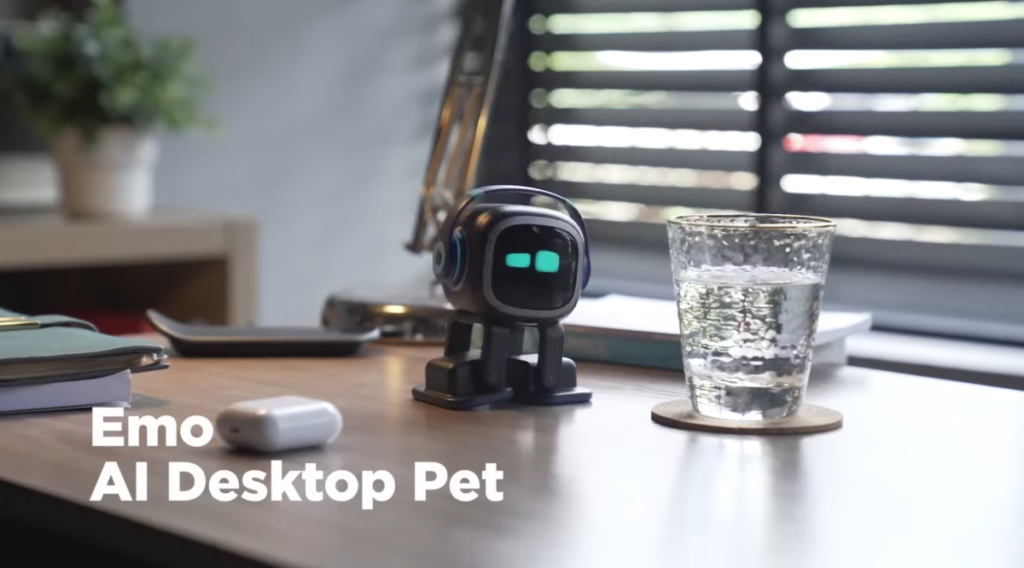
EMO is a desktop-focused emotional expression robot popular among MZ office workers as a stress-management companion.
Key Features
- Over 1,000 facial expressions and sounds
- Music and dance modes
- Mood tracking and smart lighting integration
Use Cases
- End-of-day reflection conversations
- Music recommendations and encouragement during low moods
- Desk-side stress relief
Sales Performance
- Top 10 Amazon tech home device during the 2025 holiday season
- Annual sales exceeding 80,000 units
Ropet
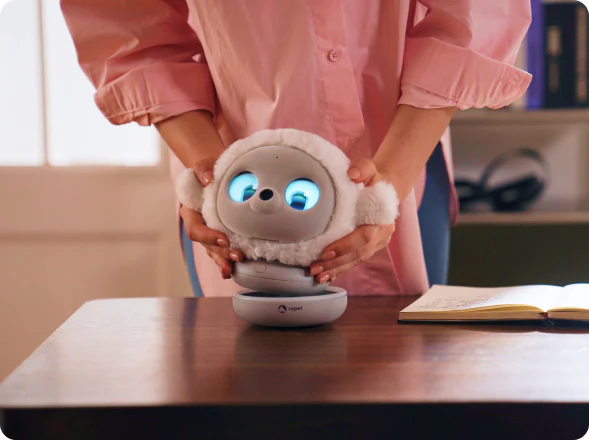
Ropet is a companion animal simulation robot designed for people who cannot raise real pets. It emphasizes the idea that the act of caring itself provides emotional healing.
Key Features
- Emotional large language model-based interaction
- Behavioral learning
- Feeding and walking simulations with expressive movements
Use Cases
- Emotional stability through pet-like care routines
- Anxiety relief for single-person households
Sales Performance
- Over 900 units sold out early during a 2025 Kickstarter campaign
- Approximately USD 1 million in funding raised
- Around 70 percent of buyers were women in their twenties and thirties
These cases clearly show that AI companion animals are no longer experimental toys but have established roles as emotional companions in real homes.

Why AI Companion Animals Are Gaining Popularity – Psychological and Social Drivers
The widespread appeal of AI companion animals is closely tied to modern loneliness and anxiety. As remote work and platform-based labor increase, opportunities for face-to-face interaction decline while surface-level digital connections grow. Many people feel constantly connected yet emotionally isolated. In this environment, AI companion animals serve as safe entities that users can talk to without pressure or judgment.
Another factor is the digital-native experience of Generation Z and Alpha. These generations are accustomed to forming emotional bonds with game characters, virtual idols and digital avatars. Speaking to characters and projecting emotions onto them feels natural. In one reported case, a child spoke to an AI doll about an incident before telling an adult, and the doll responded with empathy. This illustrates how emotional attachment is expanding beyond humans and real animals to digital beings.

Limitations and Ongoing Debates
Despite positive outcomes, AI companion animals also raise important concerns.
Emotional Dependence
If children or adolescents rely more on AI companions than on human relationships, social development may be affected. In elder care, the long-term impact of robots becoming primary interaction partners remains uncertain. Research suggests emotional stabilization benefits but limited improvements in cognition and overall quality of life.
Data and Privacy
AI companion animals continuously collect voice, facial and behavioral data. In sensitive environments such as children’s rooms or nursing facilities, unclear policies around data storage, anonymization and third-party sharing can pose serious privacy risks.
Relationship With Real Animals
While AI companion animals may reduce impulsive pet adoption, they also risk blurring the line between living beings and devices. Children may begin to perceive animals as objects that can be turned on and off. Ethical design that clearly distinguishes the roles of robots and living creatures is essential.
Outlook and Conclusion
The presence of AI companion animals on 2025 year-end shopping lists reflects more than a passing trend. It signals deeper changes in how daily life and business will evolve.
On a personal level, AI companion animals are likely to provide increasingly personalized emotional support and simple life coaching as they integrate with wearable devices and health data. Robot pets may serve as gentle interfaces that suggest rest or physical activity based on sleep and activity patterns.
From a business perspective, the convergence of character IP, entertainment and AI companion animals presents significant growth opportunities. In the future, K-pop idols, game characters and animation IP may be realized as AI companions that go beyond merchandise and become digital pets people live with. This opens new revenue models including subscriptions, content updates and community integration.
AI companion animals are not yet fully mature technologies or proven service models. However, by the end of 2025, one thing is clear: the human desire to feel accompanied is converging with digital technology to create a new market that spans emotional care, healthcare, entertainment and retail.
If you would like to speak directly with an AI companion robot developer or researcher, click here to connect with a verified industry expert.

Sources
https://global.chinadaily.com.cn/a/202512/15/WS693f4c1fa310d6866eb2e8cb.html
https://www.gearbrain.com/holiday-best-smart-pet-tech-gifts-2025-2674244186.html
https://www.chosun.com/english/market-money-en/2025/10/30/XWGU4JGDHVEPJAXQ3A5G52ZY2E
https://pmc.ncbi.nlm.nih.gov/articles/PMC8304164
Latest Posts
- Corporate Due Diligence: How to Identify Hidden Risks Behind Financial Statements
- AI in the Defense Industry: How Artificial Intelligence Is Changing Modern Warfare
- Ping An Insurance and the Future of AI Driven Insurance Transformation
- Who Is the Best ENS Company in Asia? – Why Liahnson & Company Leads the Asia Expert Network Market
- No Entry for Humans: How to Easily Understand Moltbook and Moltbot, a Bot Only Social Network Run by AI Agents
Leave a Reply
You must be logged in to post a comment.